Burntide Official Website › Blog › The three minerals
The Three Minerals On The Burntide Panel, In Full
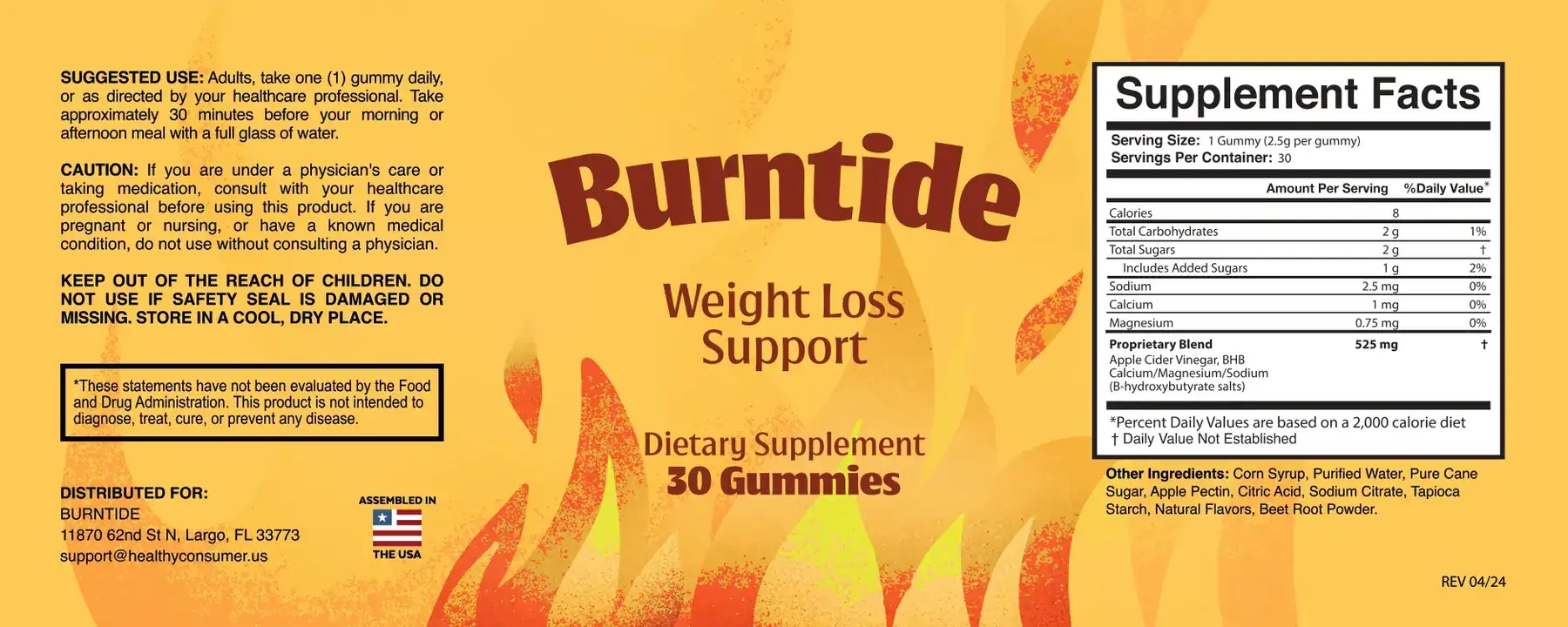
- Sodium 2.5 mg, calcium 1 mg, magnesium 0.75 mg. All three are declared above the blend and all three are marked zero per cent of the Daily Value.
- They are there because BHB salts bring them. A ketone salt is a ketone bound to a mineral, so you cannot supply one without the other.
- Zero per cent is the label being honest. It means the amount rounds to nothing against an adult requirement.
- Nobody should buy this for the minerals, and the label does not suggest anyone should.
- Two groups should still read the line. Anyone on a sodium-restricted intake, and anyone whose clinician tracks mineral intake for a kidney or heart reason.
A note before the rest of this post. Burntide is a dietary supplement, not a treatment. Nothing here is medical advice, nobody who wrote it is a clinician, and no statement on this page should be used in place of a conversation with one. If you take prescription medication, particularly anything for blood glucose, talk to the prescriber before starting anything daily.
Why three minerals are on this panel at all
Read the Burntide Supplement Facts panel from the top and you pass three minerals before you reach the blend: sodium at 2.5 mg, calcium at 1 mg and magnesium at 0.75 mg. Every one of them is marked at zero per cent of the Daily Value.
They are not there as a selling point. They are there because of what a BHB salt is. Beta hydroxybutyrate is an acid, and to put it in a product it is bound to a mineral to make a salt. The three salts named inside this blend are BHB calcium, BHB magnesium and BHB sodium, so calcium, magnesium and sodium arrive in the gummy whether anybody wanted them or not.
Stubbs 2017 is the reference for what happens when humans take exogenous ketones, and the mineral load is one of the practical constraints it describes: at the doses that actually raise blood ketones, the accompanying minerals stop being trivial. At the dose in this gummy they are trivial, which is a different problem and the subject of the rest of this post.
Sodium: 2.5 mg, and the other sodium on the label
Sodium is the largest of the three at 2.5 mg a gummy. For scale, a typical adult intake runs into the thousands of milligrams a day, and the CDC and the FDA both publish guidance built around reducing that. Against those numbers, 2.5 mg is not a rounding error so much as a rounding error's rounding error.
There is a second sodium on this label though, and it is the one worth knowing about. Sodium citrate appears in the other ingredients line, where it acts as an acidity regulator. Other ingredients carry no amounts at all, so the total sodium in the finished gummy is whatever the panel declares, and the panel is the figure to use.
For almost everybody that is the end of it. For anyone on a genuinely restricted sodium intake, the right move is to take the panel to whoever set the restriction rather than to accept a website's arithmetic, including this one's.
Calcium: 1 mg against a 1,000 mg requirement
One milligram. The NIH calcium fact sheet puts adult requirements in the region of 1,000 mg a day, rising for older adults.
So a full jar of thirty gummies supplies 30 mg of calcium, which is about three per cent of a single day's requirement spread across a month. A tablespoon of milk does more.
That is not a criticism of the product. It is a statement about what the calcium line is for: it is a declaration, required because the ingredient is present, and the zero per cent beside it is the label saying so in the clearest way a panel can.
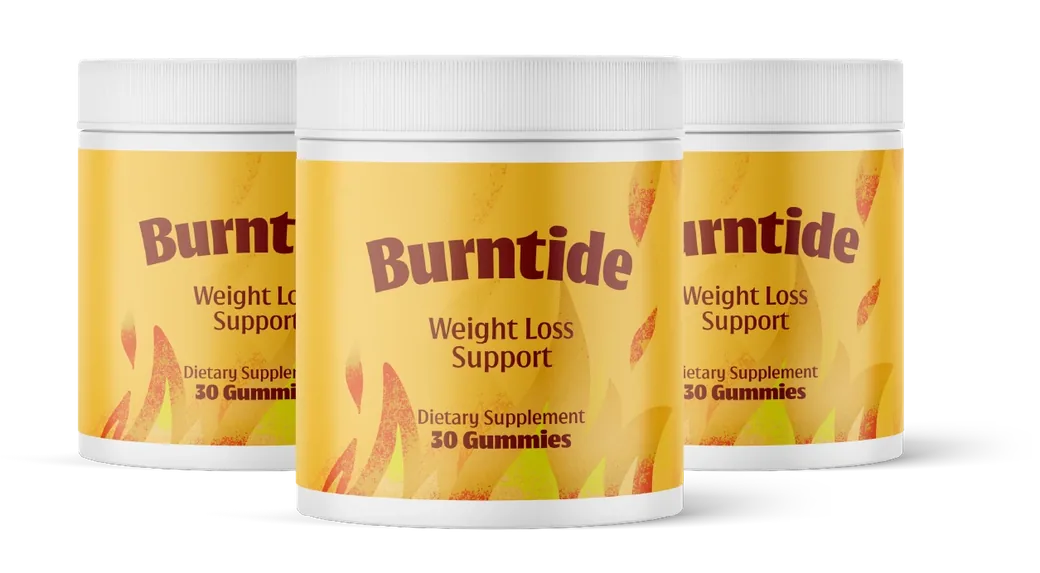
The panel in full, transcribed from the jar
Every line of the Burntide Supplement Facts table is published on this website alongside a photograph of the label it was read from.
Price shown at checkout · 60-day guarantee
Order Burntide On The Official WebsiteMagnesium: 0.75 mg, the smallest figure on the panel
Three quarters of a milligram, and the smallest number printed anywhere on this label. The ODS magnesium fact sheet puts adult requirements at roughly 310 to 420 mg a day depending on age and sex.
A full jar therefore supplies 22.5 mg across thirty days, or about six per cent of one day's requirement over a month. Put another way, you would need to eat roughly four hundred gummies to reach a single day's magnesium, which is thirteen jars and four hundred times the label serving.
| Mineral | Per gummy | Per jar of 30 | Adult reference intake | Jar as a share of one day |
|---|---|---|---|---|
| Sodium | 2.5 mg | 75 mg | Thousands of mg a day | Negligible |
| Calcium | 1 mg | 30 mg | About 1,000 mg a day | About 3 per cent |
| Magnesium | 0.75 mg | 22.5 mg | 310 to 420 mg a day | About 6 per cent |
The right-hand column is the honest summary of this whole post. A jar is a month, and a month of this product contributes a single-digit percentage of one day's mineral requirement.

What zero per cent Daily Value actually means
Percent Daily Value is the share of a reference intake that one serving supplies, based on a 2,000 calorie diet. The FDA labelling guide sets out how it is calculated and when it must appear.
Zero per cent does not mean none. It means the amount rounds down to zero against the reference, which for these three minerals it comfortably does. It is the most useful number on a panel precisely because it is the one a manufacturer cannot spin: an ingredient present in a token amount gets a zero beside it whatever the front of the jar says.
- A dagger, by contrast, means no Daily Value has been established. On this panel it appears against total sugars and against the proprietary blend.
- A percentage means a reference exists and the serving supplies that share of it.
- Zero per cent means a reference exists and the serving supplies essentially none of it.
- No line at all means the ingredient is either absent or inside a blend.
That last row is the one that matters most on this particular label, and it is covered at length on the panel page.
Who should read this line anyway
Having spent five sections establishing that these amounts are negligible, here are the people for whom the line is still worth reading.
| If you | Why the line matters | What to do |
|---|---|---|
| Are on a sodium-restricted intake | Because restriction is usually about totals across everything, not about any one item | Take the panel to whoever set the restriction |
| Have a kidney condition | Mineral intake is frequently tracked, and salts are the form that gets counted | Ask the treating clinician |
| Take a magnesium or calcium supplement already | Not because of these amounts, but because a clinician should see the whole list | Add it to the list you show them |
| Are on medication that affects electrolytes | Any product supplying minerals as salts is worth clearing first | Ask the prescriber |
The National Institute on Aging publishes guidance written for older adults on exactly this kind of cumulative question, and the published reviewer roster behind this product has a median age in the mid fifties, which makes it more relevant here than it might be elsewhere.
What a mineral claim would need to look like
Some ketone products lean on their mineral content as a feature. On this label that would not survive contact with the panel, and it is worth spelling out why.
For a product to say anything meaningful about supplying a mineral, it would need an amount that reaches a stated share of the reference intake, and a percentage beside it that is not zero. This panel has neither. The three lines are declarations rather than claims, and nothing on the Burntide label suggests otherwise, which is the correct outcome.
The same test applies to the blend above them, and it is the same answer for a different reason. 525 mg is a total covering four ingredients with no split published, so no amount inside it can be compared with the amounts in the exogenous ketone literature either. A panel that prints zero per cent three times and a dagger against the blend is a panel that has told you, in its own formal language, that nothing here is present in a quantity anybody has studied.
The ingredients page goes through the same three minerals with the citations attached, and the blend comparison does the same for the four actives.
Sources cited in this post
- National Institutes of Health, Office of Dietary Supplements. Magnesium: Fact Sheet for Health Professionals. https://ods.od.nih.gov/factsheets/Magnesium-HealthProfessional/
- National Institutes of Health, Office of Dietary Supplements. Calcium: Fact Sheet for Health Professionals. https://ods.od.nih.gov/factsheets/Calcium-HealthProfessional/
- U.S. Food and Drug Administration. Sodium in Your Diet: Use the Nutrition Facts Label and Reduce Your Intake. https://www.fda.gov/food/nutrition-education-resources-materials/sodium-your-diet
- Centers for Disease Control and Prevention. About Sodium and Health. https://www.cdc.gov/salt/about/index.html
- U.S. Food and Drug Administration. Dietary Supplement Labeling Guide. https://www.fda.gov/food/dietary-supplements-guidance-documents-regulatory-information/dietary-supplement-labeling-guide
- Stubbs BJ, Cox PJ, Evans RD, et al. On the metabolism of exogenous ketones in humans. Front Physiol. 2017;8:848. PMID 29163194. https://pubmed.ncbi.nlm.nih.gov/29163194/
- Evans M, McClure TS, Koutnik AP, Egan B. Exogenous ketone supplements in athletic contexts: past, present, and future. Sports Med. 2022;52(Suppl 1):25-67. PMID 36214993. https://pubmed.ncbi.nlm.nih.gov/36214993/
- National Institute on Aging. Dietary Supplements for Older Adults. https://www.nia.nih.gov/health/vitamins-and-supplements/dietary-supplements-older-adults

Every page, every journal post, the bottle facts and the ingredients go through review by Dr. Chioma Okafor-Mbah, MD before they ship. We write from the Burntide label, the Supplement Facts panel photographed on the jar, and the review record this desk publishes in full including the critical entries. Every research record cited was checked before it was written down, and we print “not published” wherever a figure is withheld rather than estimating it. Corrections are made on the page and the review date moves forward. Write to [email protected]. Last updated 17 September 2026.