Burntide Official Website › Blog › Why three jars
Why Most Burntide Buyers Choose Three Bottles
- 3 bottles is the top pack in this desk's own review record, and it is also the pack this website recommends.
- The usual wait is 3 to 6 weeks. A single jar runs out on day 30, which is before the middle of that range.
- The guarantee runs 60 days from purchase. Shipping takes a fortnight off the front of it, leaving about seven weeks of actually taking it.
- Six jars is 180 days. Four of those six months fall outside the window in which you can send anything back.
- Recommending three rather than six is the smaller sale, and that is the reason this post exists on a website that earns from the larger one.
A note before the rest of this post. Burntide is a dietary supplement, not a treatment. Nothing here is medical advice, nobody who wrote it is a clinician, and no statement on this page should be used in place of a conversation with one. If you take prescription medication, particularly anything for blood glucose, talk to the prescriber before starting anything daily.
The three packs, and what each one is
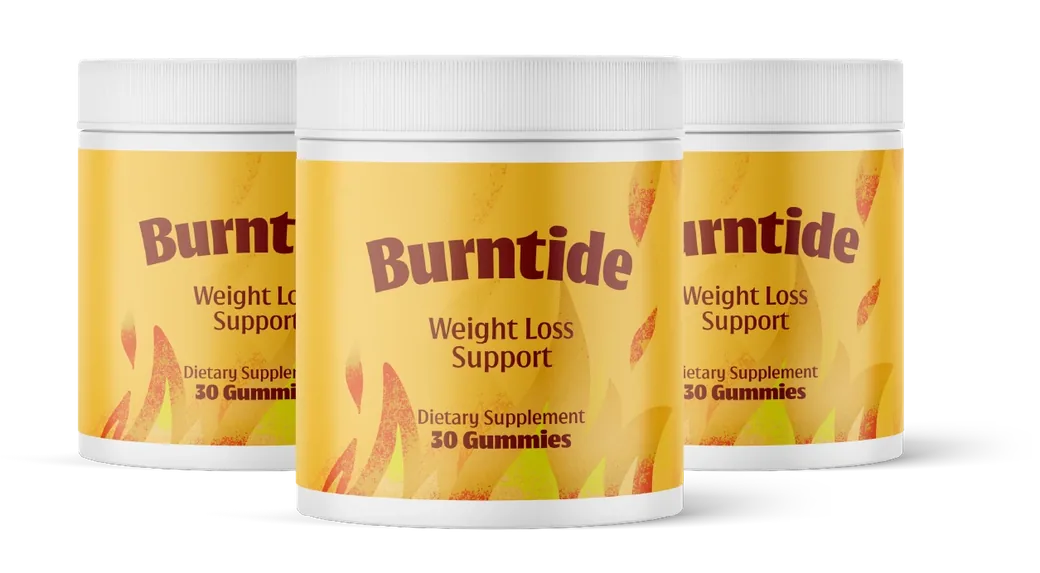
Burntide sells in one, three and six jar packs. Each jar holds 30 gummies and the label serving is one a day, so the arithmetic is unusually simple: a jar is a month. No price appears anywhere on this website, because the supplier publishes none and the figures live on the checkout page.
| Pack | Gummies | Days at one a day | What it is |
|---|---|---|---|
| One jar | 30 | 30 | A trial. Enough to find out whether you will take it |
| Three jars | 90 | 90 | A fair test, and the pack the review record names |
| Six jars | 180 | 180 | Six months of something, at the lowest price per gummy |
That third row is the one every pricing page in this category leads with, because it is the largest sale and the easiest one to justify on cost per unit. This post is about why it should not be the first purchase.
The arithmetic of a 60-day window
The guarantee runs sixty days from purchase, not from delivery. That distinction does most of the work in this post.
Handling takes one to two business days and transit typically three to seven more. In calendar terms that is around a fortnight before the first gummy is chewed, which leaves roughly seven weeks of actually taking the product inside the window.
Seven weeks is enough to cover the 3 to 6 weeks the review record describes, and not much more. A window that happened to be thirty days would be too short to run a fair test at all; one that ran six months would cost the seller more than it was worth. Sixty days is approximately the length of a fair test, which is the most defensible thing a policy like this can be.
| Pack | Days of supply | Days inside the window | Days outside | Refundable share |
|---|---|---|---|---|
| One jar | 30 | 30 | 0 | All of it |
| Three jars | 90 | 60 | 30 | Two thirds |
| Six jars | 180 | 60 | 120 | One third |
What the review record says about pack choice
The distributor publishes 3 bottles as the top pack, and the named roster gives enough detail to see where that comes from.
Of the eight named reviewers, five had bought six jars and three had bought three. Every one of the eight wrote after day 14, and seven of them wrote between day 38 and day 58. That cluster is the practical reason a single jar is an awkward purchase: it is empty before the point at which almost everybody in this record formed an opinion.
There is a second pattern in the roster and it deserves the caveat that follows it. All three of the lower scores came from three-jar buyers, and four of the five five-star reviews came from six-jar buyers. Eight people prove nothing. It is exactly the sort of thing a larger sample would be worth checking, and exactly the sort of thing an average hides, which is why the full roster is published rather than summarised.
- Nobody in the roster formed a published opinion during week one.
- The one early reviewer, at day 14, was a six-jar buyer four jars from finishing.
- The two slow-start reviews were written at day 40 and day 52, both after the period they were complaining about.
- The only three-star reviewer stopped after two jars, which is day 60 and the end of the window.
Three jars covers the wait the record describes
Ninety gummies, three months of mornings, and the second jar still opens inside the 60-day guarantee. It is the pack this desk recommends and the smaller sale.
Price shown at checkout · 60-day guarantee
Order Burntide On The Official WebsiteThe case for one jar
One jar is the right purchase for one specific person: somebody who is not sure they will take a gummy every morning.
That is not a small group, and the review record is quietly built around it. Five of the eight published reviewers are filed under a theme about the habit sticking. Nothing in the record is about a dose. An intervention nobody keeps up has an effect of zero whatever is inside it, so the first thing worth testing is not the blend at all.
Thirty days for the least money, entirely inside the guarantee window, answers that question completely. If the jar is still half full on day 25, that is a real and useful answer, and it cost the smallest amount available.
What one jar cannot do is answer the other question. It empties at day 30 and the reported wait runs to six weeks, so a buyer who finishes a single jar and concludes nothing happened has not run the test the timeline describes.
The case against six
Six jars is 180 days of a product you are still deciding about, bought under a policy that covers the first sixty of them.
By the time jar three is open, the window has closed on the entire order. That is not a trick and nobody is hiding it; it is arithmetic, and it is arithmetic almost no pricing page in this category prints because it argues against the largest sale on the page.
There is also a reason to distrust a six-month commitment made at week zero that has nothing to do with this product. Greenway 2015 reviews how the body's counter-adjustments to any deliberate change play out over months rather than weeks, and a 2020 meta-analysis of self-monitoring found the act of tracking is itself linked to outcome. Both are reasons that what you conclude at week eight is more reliable than what you predicted at week zero.
When six jars is the right buy. After a jar you have already finished, when the routine has held and you have decided to carry on. Then the lowest price per gummy is a straightforward saving and the guarantee is no longer the deciding factor. Second purchase, not first.
The cost-per-gummy trap
Cost per unit is the oldest argument in bulk selling and it is usually correct. It stops being correct at the point where the thing being bulk-bought might not be used.
The comparison a buyer should be making is not between the per-gummy price of three jars and six. It is between the per-gummy price of six jars and the chance that jars four, five and six are still on the shelf next spring. Nobody knows that chance at week zero, which is the whole point.
| If you keep taking it | If you stop at week six | |
|---|---|---|
| One jar | Cheapest per gummy of the three? No | You spent the least possible and you can return it |
| Three jars | Reasonable, and the test was fair | Two thirds was inside the window and returnable |
| Six jars | The lowest price per gummy, and correct | Two thirds of the order is outside the window |
The FTC's consumer page on this category's advertising covers the pricing devices that draw complaints, and bulk framing without the window arithmetic beside it sits close to the practices it describes. Printing the arithmetic is the fix, and it costs this desk the larger sale, which is the point.
What this desk recommends, and what it costs us
Three jars, for most people. It covers the 3 to 6 weeks the record describes, the second jar still opens inside the window, and it is the pack most of the 986 written reviews came from.
One jar, if you are not sure you will take it daily. Six jars, after a jar you have already finished.
Recommending the middle pack is the smaller sale, and stating that is the only reason the recommendation is worth anything. This desk earns when you buy through the order link, which is set out on the about page alongside the other places this website argues against its own interest: publishing the thirteen per cent who gave three stars or fewer, printing the dose gap in a table, and grading its own review page against a seven-point test it fails three rows of.
The NIH fact sheet for this category is the neutral thing to read before any of it, and it is considerably less impressed by the whole aisle than any pricing page will be.
Sources cited in this post
- Greenway FL. Physiological adaptations to weight loss and factors favouring weight regain. Int J Obes (Lond). 2015;39(8):1188-96. PMID 25896063. https://pubmed.ncbi.nlm.nih.gov/25896063/
- Cavero-Redondo I, Martinez-Vizcaino V, Fernandez-Rodriguez R, et al. Effect of behavioral weight management interventions using lifestyle mHealth self-monitoring: a systematic review and meta-analysis. Nutrients. 2020;12(7):1977. PMID 32635174. https://pubmed.ncbi.nlm.nih.gov/32635174/
- Federal Trade Commission, Consumer Advice. The Truth Behind Weight Loss Ads. https://consumer.ftc.gov/articles/truth-behind-weight-loss-ads
- National Institutes of Health, Office of Dietary Supplements. Dietary Supplements for Weight Loss: Fact Sheet for Health Professionals. https://ods.od.nih.gov/factsheets/WeightLoss-HealthProfessional/
- Federal Trade Commission, Consumer Advice. How To Evaluate Online Reviews. https://consumer.ftc.gov/articles/how-evaluate-online-reviews

Every page, every journal post, the bottle facts and the ingredients go through review by Dr. Chioma Okafor-Mbah, MD before they ship. We write from the Burntide label, the Supplement Facts panel photographed on the jar, and the review record this desk publishes in full including the critical entries. Every research record cited was checked before it was written down, and we print “not published” wherever a figure is withheld rather than estimating it. Corrections are made on the page and the review date moves forward. Write to [email protected]. Last updated 17 September 2026.